About
me



I’m Kim, a capability builder based in Melbourne, Australia. During office hours you’ll find me helping organisations make sense of learning, education, and system-wide change. When I’m not working, I’m trying to be a fun dad, or dreaming about having a bigger garden.
If you have to know, I’ve got a PhD. I’ve also worked across universities, international organisations, and high-performance sport.
Contact me if you’re hungry for more.
Small
Project
Strong learning can be applied
to even the teeniest of problems. Let’s start
this one by defining the problem.
Large
Project
Big capability problems need the same clear thinking as smaller ones. You know the drill now. Let’s start by defining what needs to change:
1/8
What’s the problem here?

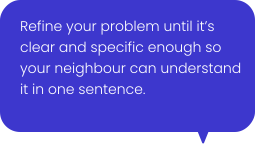
You need a new hobby and Netflix isn’t it. Your friends are baking or embroidering or rock climbing. Or raising their kids... is that a hobby? Whatever. You need something to do with your weekends otherwise you’ll end up scrolling for hours and melting into your couch.
2/8
Do you have any bright ideas?
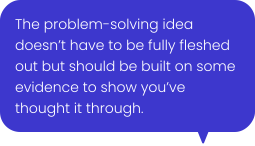
Let’s brainstorm some possible hobbies for you. Reading? No, you want something to keep you active. Flying a kite? Maybe not, you don’t want to anger the birds. How about gardening? Bingo! You love dill and rhubarb. Time to turn this idea into something more meaty. Or planty.
3/8
Developing a viable concept
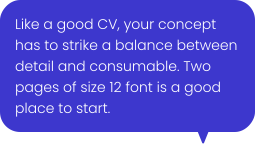
We need a rough draft of the plan to share around and get advice. Curate a Pinterest board of beautiful gardens, sketch a picture of yourself looking sweaty and tanned while working in the garden and decide what you’ll plant. After much soul-searching, we’ve landed on: dill, spring onion, and some rhubarb. Yum.
4/8
Bring your partners in
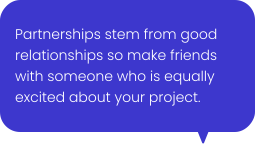
You’ll need to ask your housemates if you can tear up the garden in exchange for a lifetime supply of dill. Show them the sketch of you sweating in the garden to convince them. And it might be time to call your friend with a green thumb and ask for some advice on how to keep dill alive.
5/8
Make a plan, Stan
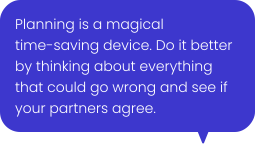
With your friend’s advice and housemate’s permission, you get planning. You write down the essential ingredients and a budget. You’ve every detail so you won’t mistakenly leave Bunnings with a new deck chair and three sausages.
6/8
It’s do time
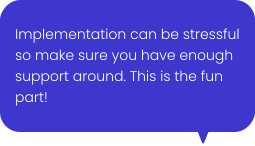
You’ve thought about this for long enough. The sun is shining and you start planting. You’re doing it! Before long, the garden bed is set up and looking fabulous. You’re impatient to taste the fruits of your labour, so you sample some of the dill. The plant looks bald now but your mouth is happy. You’re a gardener!
7/8
Shout it from the rooftops
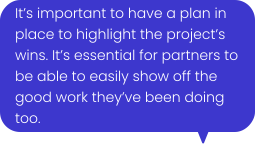
The garden bed is booming and you’ve started swapping tips with other neighbourhood gardeners. While out collecting kale (for the kale pie you never thought you wanted) you snap a nice pic of your garden and bam. Likes aplenty. Friends you haven’t seen in a lifetime are messaging to suggest produce swaps. Life is good.
8/8
Watch and learn, buddy
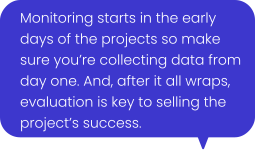
The only fly in the ointment with your new garden is that dill you made bald has never really recovered. Who knew chomping bulk dill would set the plant back so far? Oh well. You know now. You make a note: ‘Don’t take dill hair before it’s ready’.
Anddd finish. Congratulations
green thumb!
Your gardening project went down without a hitch.
Want to see a big project?
LARGE PROJECT
1/8
What’s the problem here?

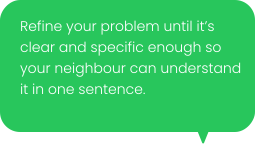
You’re the bigwig in charge of a big sport organisation. Your sport has always been enjoyed by men but there’s one big problem - not enough women and girls are playing. This problem is bigger than your organisation but the good news is you can do something about it.
2/8
Do you have any bright ideas?
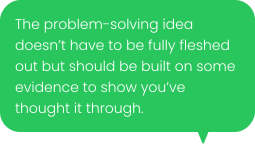
You want a bold idea to welcome women into your sport. Then it hits you - a professional league for women. Women already watch your sport and they deserve to be represented on the field too and it might inspire them to play! It’s a huge project but you can feel it’s the right move.
3/8
Developing a viable concept
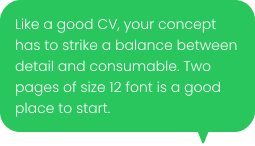
You sketch out a rough idea to leverage the enthusiastic men's club to rally women’s teams under their banners. You start with a shortened season to gather data, work out problems, and understand the dynamic of a women’s league. With your draft plan in place, you're ready to approach partners and funders.
4/8
Bring your partners in
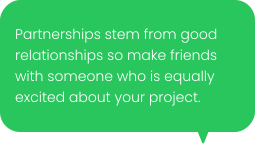
This is all new to you so you need to gather experts to get things moving. Women have been playing your sport for a while so you get them on board and listen to their ideas. Passionate pioneers will be key. You start to methodically build relationships with people who will help bring the league to life.
5/8
Make a plan, Stan
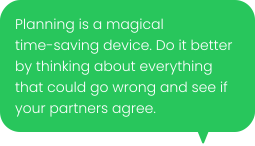
Jeepers, things are moving quickly! It’s time to tackle the details. When will the games be scheduled, how many games per season, how much money will players receive? In this first season, you don’t have the resources to do everything so you prioritise.
6/8
It’s do time
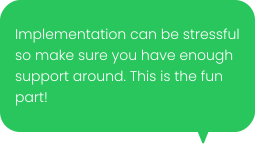
This is the moment you’ve been waiting for! After all the planning, now you’re actually doing it. From the first game, the women’s league is a game changer. New faces in the media, new investment, and new stories are already emerging. So much excitement, such a whirlwind but you quickly remember, stick to the plan to keep it steady.
7/8
Shout it from the rooftops
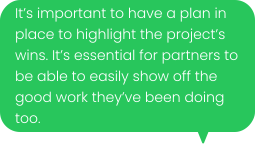
You know a big part of this league’s success was sharing stories to the world. The front pages of the paper were covered in photos of women playing football. Huge! This was no accident though, you knew who had the biggest megaphone and told them what they needed to hear.
8/8
Watch and learn, buddy
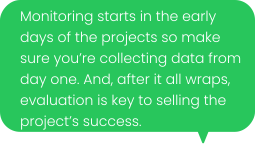
The first season is done and dusted and you know the league has great future ahead. What could’ve been done better? Lots. But that’s okay. Because you planned well, you collected feedback all season and now have a clear idea of what the system needs next.
Anddd finish. Congratulations
groundbreaker!
Your organisation blazed the trail and launched a women's league. Already other organisations are following suit. Game changer.
This was based on my PhD.
Here’s an article with my key findings